




Published by maggie@omahadai... on Thu, 03/12/2026 - 12:00am
ODAKA, Japan (AP) — Fifteen years after the 2011 nuclear disaster, color-coded radiation maps hang on the wall of Futabaya Ryokan, the family-run inn Tomoko Kobayashi operates in her near-deserted hometown in northeastern Fukushima.
Published by maggie@omahadai... on Thu, 03/12/2026 - 12:00am
LINCOLN — Nebraska policy-makers have talked “ad nauseam” about a statewide housing and worker shortage and the need to do something about it, State Sen. Jane Raybould of Lincoln said Monday, echoing the sentiment of several colleagues.
Published by maggie@omahadai... on Thu, 03/12/2026 - 12:00am
SUGARLOAF, Pa. (AP) — For John Zola, the 40 acres were like a paradise: apple orchards tucked into northern Pennsylvania's rolling hills, a barn, meadows and more than enough land for four houses: one for himself and his wife and each of his three adult children.
OMAHA — One of Nebraska’s best-known construction companies has challenged the City of Omaha’s handling of one of the priciest city infrastructure investments ever.
Hawkins Construction Company, whose local roots harken back to the 1920s and building Lincoln’s Memorial Stadium, is fiercely critical of potentially excessive costs in the deal that they say are not because of “nefarious” city motives.
CEO Chris Hawkins sees it as a case of people who “likely fell asleep at the wheel.”
LINCOLN — After new economic forecasts grew Nebraska’s projected budget deficit by roughly $175 million, lawmakers turned to the state’s rainy day fund to help fill the gap.
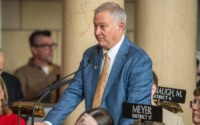
The Legislature’s Appropriations Committee voted 8-0 Friday to recommend pulling $130 million from the state’s cash reserve to help plug the budget hole. Though Gov. Jim Pillen asked lawmakers to avoid using the reserve this session, Appropriations Chair State Sen. Rob Clements of Elmwood said the committee was left with little choice by the end of its budget deliberations.
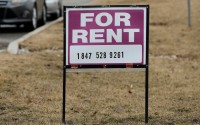
As the Trump administration continues to focus on the legal immigration statuses of many across the country, a revived proposal by the U.S. Department of Housing and Urban Development could impact many families’ ability to receive rental assistance.
The proposed rule would prohibit “mixed-status” families — those including U.S. citizens and people without legal immigration status — from living in public and other subsidized housing. It would apply to HUD public housing, Section 8 rental assistance, and some housing development grants.
As far as 157-year-old houses in Omaha go, Tim Reeder admits his isn’t all that special.
Reeder knows the house is not Omaha’s oldest — that distinction, as far as local historians can tell, belongs to a one-story home that’s 10 years older. Reeder’s house is not even in its original location or its original condition.
In fact, it was practically uninhabitable — save for the raccoons that called it home — when Reeder purchased it for $75,000 in 2024.
In November 2025 the Trump administration announced a special park pass commemorating the nation’s 250th anniversary that featured images of two presidents: George Washington and Donald Trump.
Featuring the current president – in place of the National Park Service’s usual landscape pictures – triggered both a lawsuit and a social media movement to put stickers over Trump’s face.
As a businessman, Trump has frequently emblazoned buildings and consumer products – shoelaces, an airline, an edition of the Bible, among many others – with his own name.
After years of states pushing legislation to accelerate the development of data centers and the electric grid to support them, some legislators want to limit or repeal state and local incentives that paved their way.
President Donald Trump also has changed his tone. Last year he issued an executive order and other federal initiatives meant to support accelerated data center development. Then last month, he cited rising electricity bills in saying technology companies that build data centers must “pay their own way,” in a post on Truth Social.
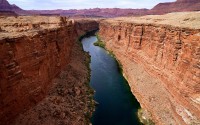
Seven states drawing water from the Colorado River for drinking, farming and electricity walked away from the negotiating table Friday without a deal on how to share the dwindling water supply starting next year.
Negotiators spent months trying to close an expansive divide between the upstream states of Utah, Colorado, New Mexico and Wyoming, and the downstream states of Arizona, California and Nevada. On Friday, they told reporters it wasn’t going to happen before a Saturday deadline imposed by the U.S. Department of the Interior.